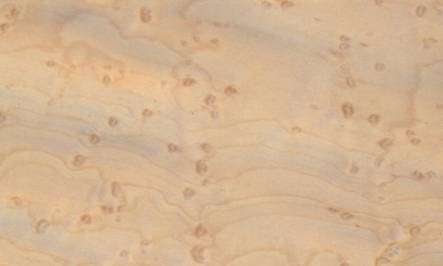
Birds-eye maple, one of the several varieties of hard maple featured in The Wood Explorer.
Common trade names: Hard Maple. Other varieties marketed as hard maple include Sugar maple and Black maple, but are slightly different species. The specifications listed here apply to the Acer saccharum, but the species above yield similar, but certainly not identical results.
Genus: Acer saccharum
Janka Hardness (pounds-force): 1450
Description: Hard maple, as noted above, may be marketed under this name with a wide variety of species in the Acer genus. The Acer saccharum is a large North American deciduous whose sapwood is preferred to the heartwood. This is relatively unique among hardwoods. This prized sapwood is quite pale, and almost white when sanded. Hard maple has very small pores that require no filler.
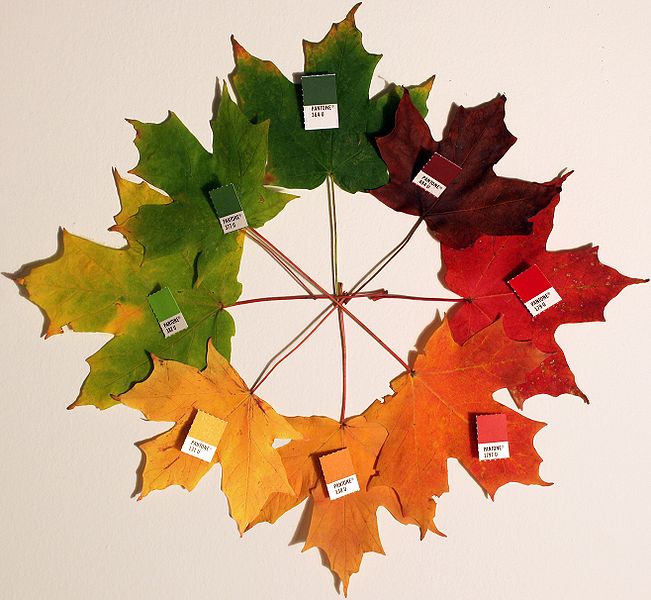
Arguably the best reason for fall to arrive, maple foliage covers nearly the entire spectrum.
Location: Southeast Canada and northeastern United States, bounded roughly by the Mississippi River on the West and Ohio River basin on the south. (Acer saccharum is also found all throughout Missouri and eastern Kansas) One would be somewhat less likely to run into this species south of Washington D.C. It’s much more suited to seasonal change than some of the other great American hardwoods.
Common Aliases: Bird’s eye maple, black maple, Canadian maple, Curly maple, Fiddleback maple, Rock maple, Sugar maple, White maple.
Performance: Glues and finishes well, and is relatively easy to work with hand and machine tools, given its density. This wood will burn if tools are not adequately sharpened, and the wood will blacken. Try again with sharper tools! That being said, Hard maple turns and finishes nicely. Some would recommend the preconditioning products prior to staining Hard Maple. Best to set aside a sample, and test some things out a little bit so that an accurate assessment can be made regarding your particular stand of maple. If using the sapwood, remember that insects will be an issue. Hard Maple is best suited to interior applications.
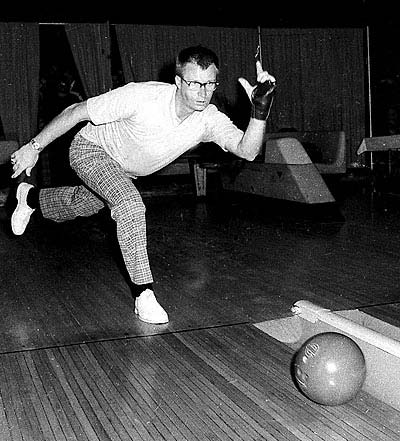
Common Uses: Bowling pins, bowling alley lanes, fine furnishings, flooring, millwork, moldings, musical instruments, audio equipment, turnings, veneers, tool handles, chairs, and many other uses requiring a strong and versatile wood.
From: The Wood Database
Common Name(s): Hard Maple, Sugar Maple, Rock Maple
Scientific Name: Acer saccharum
Distribution: Northeastern United States
Tree Size: 80-115 ft (25-35 m) tall, 2-3 ft (.6-1.0 m) trunk diameter
Average Dried Weight: 44 lbs/ft3 (705 kg/m3)
Basic Specific Gravity: .56
Hardness: 1,450 lbf (6,450 N)
Rupture Strength: 15,800 lbf/in2 (108,970 kPa)
Elastic Strength: 1,830,000 lbf/in2 (12,620 MPa)
Crushing Strength: 7,830 lbf/in2 (54.0 MPa)
Shrinkage: Radial: 4.8%, Tangential: 9.9%, Volumetric: 14.7%, T/R Ratio: 2.1